Why I built Pixies, Bixies, & Business — and what a seat is really worth.
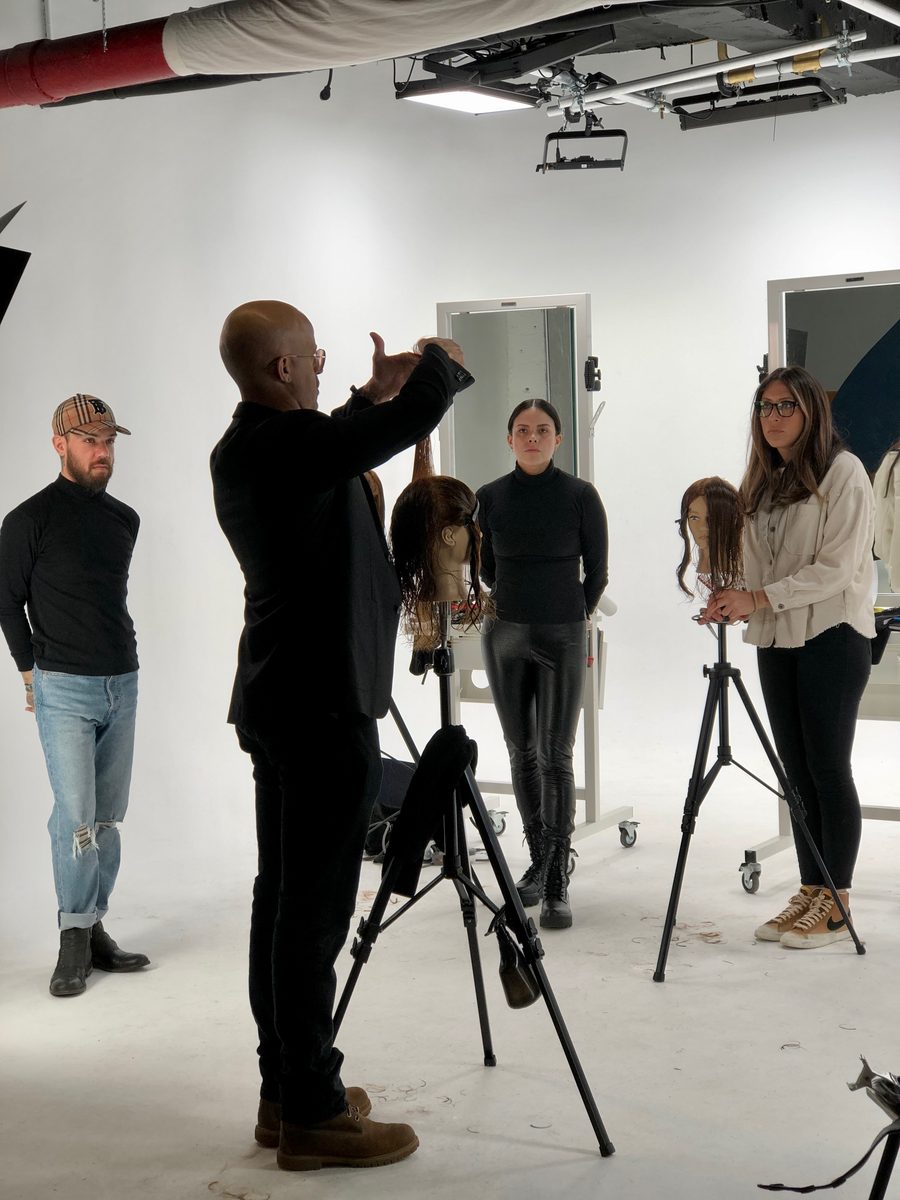 Live on the floor · this is the work
I want to tell you why this class exists, because I don’t believe you should hand anyone a Sunday of your life — or $250 of your money — without understanding exactly what you’re getting back. I’ve spent twenty-six years behind the chair and more than twenty years teaching this craft, and if there’s one thing all those rooms have taught me, it’s this: people don’t need more information. They need transformation they can use on Monday morning.
That’s the promise underneath everything I do, and it’s the promise underneath this class. So let me walk you through it — honestly, the way I’d walk a friend through it.
It started with a question I couldn’t shake.
Over my years as an educator — in salons, on stages, and inside L’Oréal, where I had the privilege of serving as Assistant Vice President of Education for Pureology, Mizani, and Biolage — I watched thousands of talented stylists take thousands of classes. Beautiful classes. Technical classes taught by brilliant educators. And I kept asking myself one question: if education is everywhere, why isn’t change?
Why does a stylist take a cutting class in October and stand behind the same chair in January doing the same consultations, charging the same prices, watching the same clients drift away and calling it “the industry”?
The answer, I came to believe, is that we’ve been teaching half the job. We teach the haircut — the sectioning, the elevation, the finish — and we send people home. But the haircut has never been the whole job. The whole job is the conversation before the haircut, the confidence during it, and the relationship after it. The whole job is what I call both sides of the chair.
Education creates understanding. Implementation creates results.
That sentence is the foundation of everything I teach. Understanding is what you leave most classes with. Implementation is what changes your book, your income, and honestly — your life. Pixies, Bixies, & Business was built to close the space between those two words. One day, both sides of the chair, nothing held back.
Why these two haircuts, right now.
Let’s talk about the craft first, because the craft is real and I take it seriously.
The pixie and the bixie are the two most requested short shapes in the game right now, and that is not an accident. Clients are asking for freedom. They’re asking for shapes that photograph beautifully, live well between appointments, and say something about who they are. When a client sits in your chair and asks for a bixie, she isn’t just asking for a haircut — she’s trusting you with a decision she’s probably been circling for months.
And here’s what I’ve learned: short hair tells the truth. A long layered cut is forgiving. A pixie is not. Every section shows. Every elevation choice shows. The grow-out shows — and the grow-out is where client loyalty is won or lost, because a short shape that falls apart in four weeks sends your client looking for another stylist, and a short shape that grows out gracefully brings her back to your chair on schedule, for years.
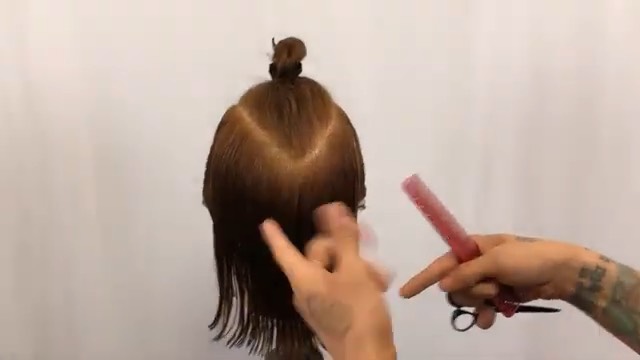 The bixie · cut live
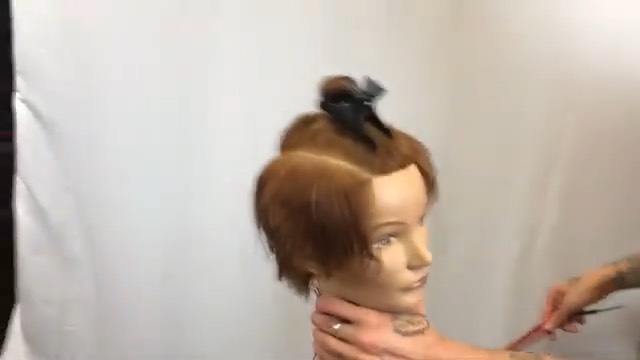 The pixie · a different game
In class, I cut both shapes live, start to finish, and I narrate every decision as I make it. Not just the what — the why. Why I section above the occipital here. Why I choose this elevation for this density. Why I leave weight in one place and remove it in another. Why, as I’ve said to more rooms than I can count, you can always cut extra — but you can’t grow extra.
I teach in a live look-and-learn format on purpose. Twenty seats, close enough to see everything, with your questions answered as I work. I’ve taught rooms of four hundred and I’ve taught rooms of twelve, and I’ll tell you the truth: the small room is where transformation happens. You don’t need to lug a mannequin or buy a kit. You need to see the decisions being made and understand them deeply enough to make them yourself on Tuesday.
The part of the day that pays for everything else.
Now let me tell you about the afternoon, because this is the part I’ve been building toward my whole career.
I say this with love for our industry: we are not in the beauty business. We are in the relationship business. The haircut is the moment of craft — but the career is built in the conversations around it. And almost nobody teaches the conversations.
Think about the last time a client sat down and said, “I’m thinking about going short, but I’m scared.” That moment is everything. Handled with skill, it becomes a transformation she’ll tell her friends about for a year. Handled nervously — with a shrug, a “sure, we can try it” — it becomes a trim, again, and both of you leave the appointment a little smaller than you arrived.
So in the business block, we work on three conversations, with the actual language:
The consultation that closes.How to read what’s actually in front of you — face shape, texture, lifestyle, how she works, how much time she’ll really give her hair on a weekday morning — and then how to make a recommendation with warmth and certainty. Clients don’t buy haircuts. They buy confidence. Yours.
Pricing, said out loud, without flinching.I’ve met so many gifted stylists who whisper their prices like an apology. We work on why that happens and how to end it — not with arrogance, but with the quiet certainty of a professional who knows what their work is worth. Your price is part of your craft. Say it like it.
The rebooking conversation. This is the one that changes books. Not a pushy script — a natural, caring conversation that happens before the cape comes off, built on the truth that a short haircut has a schedule and you are the guardian of it. When rebooking becomes something you do for your client instead of to her, everything about your calendar changes.
Clients don’t buy haircuts. They buy confidence. Yours.
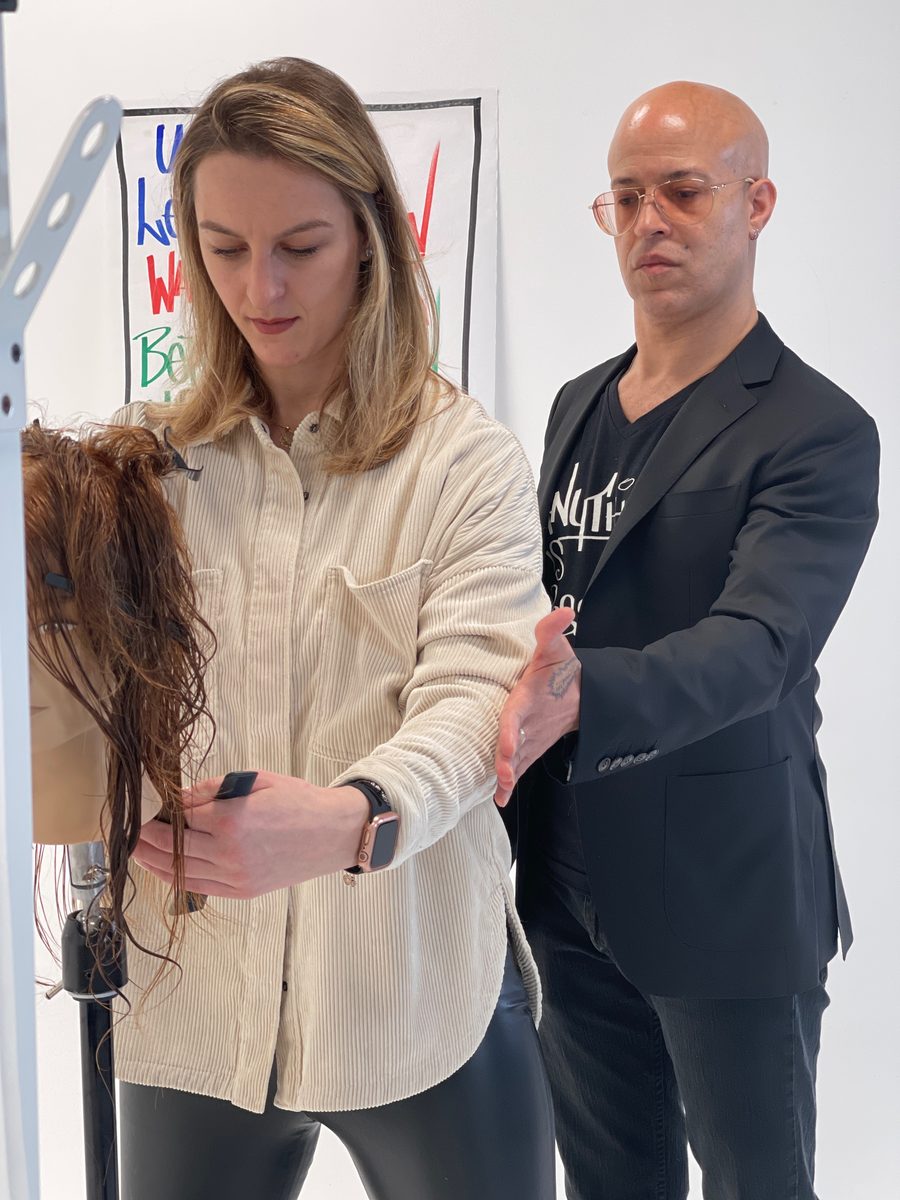 Every question answered · 20,000+ taught
Let me make the value of this concrete, because I want you to hold me to it. Picture one client — just one — who currently comes to you “when she gets around to it,” maybe every nine or ten weeks. Through a better consultation and a genuine rebooking conversation, she starts coming every six weeks, the way her shape actually needs. Over a year, that’s two to three additional visits from one person. Multiply that by even a handful of clients in your book, and the value of one day of training stops being theoretical. That’s not sales talk. That’s arithmetic — and more importantly, it’s better service. Her hair looks right all year. That’s the job.
Who this day is actually for.
I built this class for three people, and you might be more than one of them.
The newer stylist— you’ve got the fire, the feed full of inspiration, and a little fear of short hair (you’re not alone; most of us started there). You’ll leave with the structure that removes the fear: how to section with purpose, how to build a shape that holds, and the exact words for consultations you’ve been avoiding. Confidence isn’t a personality trait. It’s a byproduct of preparation.
The seasoned stylist— you can already cut. What I want for you is the afternoon: the pricing conversation you’ve been underselling for years, the rebooking rhythm that turns a good book into a full one, and honestly, a recharge. Twenty-six years in, I still leave every room I teach with something new, because a room full of professionals talking honestly about the work is where growth lives. Come get re-inspired. You’ve earned a day that pours back into you.
The salon owner— send your people, or better, come with them. When a team hears the same language on the same day, something shifts in the building. The consultation stops being a personality lottery and becomes a standard. The Monday-after conversations — “what did you take from it?” — are where culture gets built. Owners have told me for years that the education that moves their business isn’t another technique; it’s a shared way of talking to clients. That’s what your team carries home.
What happens after 3pm — because that’s where most classes fail you.
Here’s an uncomfortable truth about education, mine included: the room is easy. The Tuesday after is hard. You leave inspired, the notes go in a drawer, and by the third week the class is a warm memory instead of a changed book. I’ve watched it happen for twenty years, and I refuse to keep building days that evaporate.
So every seat in this class comes with what happens next. The final session of the day is implementation — we build your personal action plan, specific to your chair, your book, your prices, before you leave the room. And then you take the room home with you: every ticket includes the PBB Value Vault — the digital resources and class materials — and an AI coaching companionI’ve poured my teaching into, in your pocket, free for three months after class. Blank on the name of that sectioning approach three weeks later? Ask it. Rehearsing a price increase and want to practice the words before you say them to a human being? Practice with it. It answers the way I would, because it learned from me.
I’m told I’m one of the first educators in our industry to hand students a coach that keeps teaching after the class ends. I don’t say that to impress you. I say it because it’s the most honest expression of what I believe: the class is one day. Your progress doesn’t have to be.
The fear nobody talks about — and what confidence actually is.
I want to speak directly to something for a moment, because it comes up quietly in almost every room I teach, usually near the end of the day when people finally feel safe enough to say it out loud: a lot of talented stylists are afraid of short hair.Not because they lack skill — because the stakes feel higher. There’s nowhere to hide in a pixie. You can’t blend away a decision you regret. And so, year after year, gifted professionals steer clients away from the very shapes those clients came in wanting, because “maybe something with a little more length” feels safer than the conversation and the cut they’re not sure they can deliver.
I understand that fear because I’ve lived it. Early in my career, before the stages and the titles, I turned a woman’s bold ask into a timid compromise because my hands knew more than my nerve did. She never came back — not because the haircut was bad, but because she came in ready to change and left exactly the same. I’ve carried that appointment with me for over two decades, and in a real way, this class is my answer to it.
Here’s what those twenty-six years have taught me about confidence: it isn’t a feeling. It’s a structure.When you know exactly where your first section goes and why — when you know your guide is right and everything else is built on it — the fear doesn’t magically vanish; it simply stops being in charge. Preparation walks in the room before you do. That’s what we build on October 18th: not bravado, but a repeatable structure for the cut and a repeatable structure for the conversation, so the next time a client says “I’m scared, but I want it,” you can look at her and mean it when you say, “You’re in good hands.”
And I’ll add this, from the educator’s side of the chair: the greatest teachers in my life never handed me certainty. They handed me tools, and then they stood close while I found my own certainty using them. That’s the kind of room I run. Nobody gets left behind, and nobody gets talked at. We work.
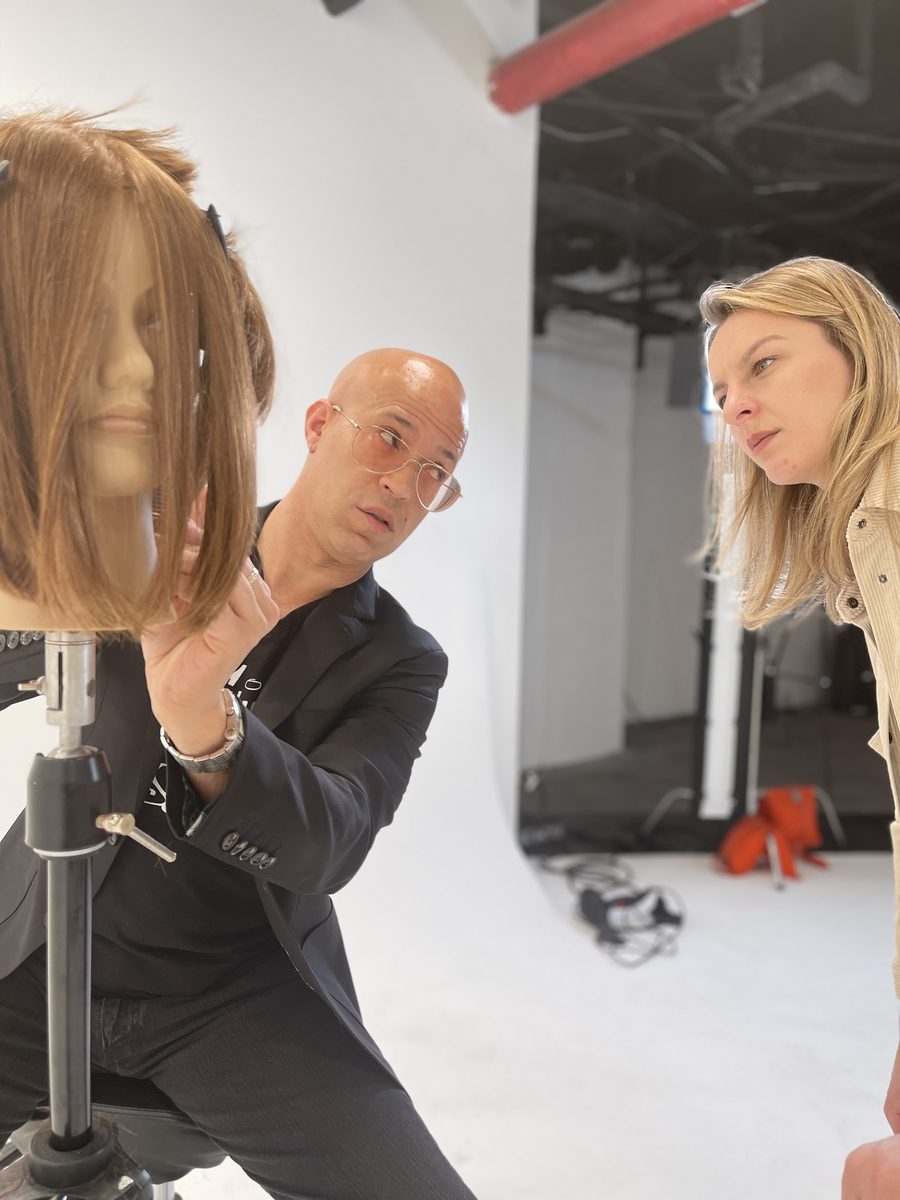 Eye level · where the truth lives
What the day actually feels like.
Let me set expectations, because a class is also an experience and you deserve to know what you’re walking into. We start at ten, together, with the foundation — what makes a short haircut grow out beautifully and keep a client coming back. Then the bixie, live, narrated, unhurried. We break, we eat, we talk — and I’ll tell you, some of the best learning of the day happens in that half hour, stylist to stylist, because twenty professionals in one room is its own kind of education. Then the pixie on a completely different head shape, because a technique you can only execute on one canvas isn’t a technique yet. Then the business block — and I promise you the room gets loud in the best way, because nothing wakes up a group of stylists like finally talking honestly about money and clients. We close with implementation: your plan, your book, your next step, written down before you touch the door.
You’ll laugh more than you expect to. You’ll write more than you expect to. And if I do my job — and I intend to — you’ll drive home with that specific kind of tired that only comes from a day that mattered.
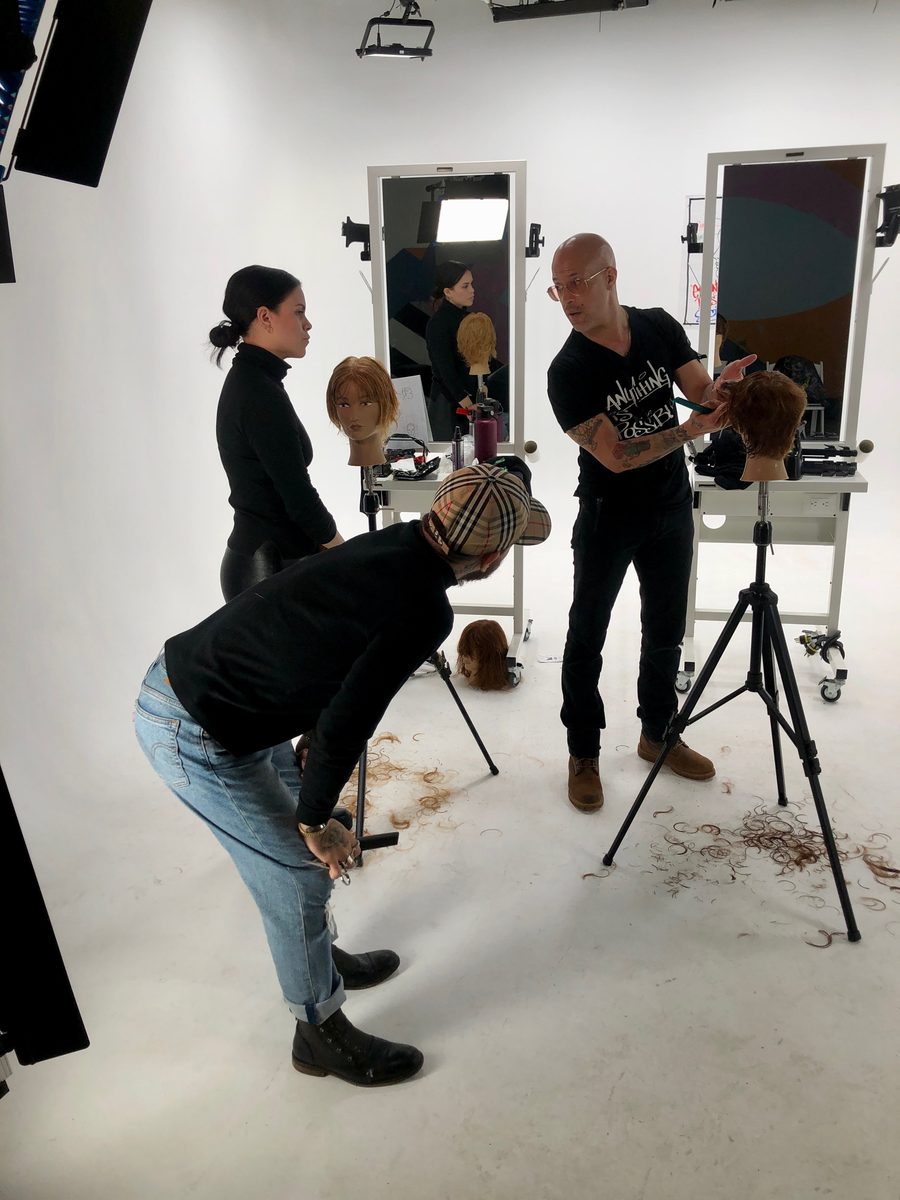 Hair on the floor · proof of work
Why only twenty seats.
People keep asking me to make the room bigger, and I keep saying no. Twenty seats means everyone sees everything. It means when you raise your hand, we actually talk. It means I learn your name, and when we build your action plan at the end of the day, it’s yours — not a handout. I’d rather change twenty careers than impress two hundred people from a stage. The economics of a bigger room are better for me and worse for you, and that’s the whole conversation.
One day. Sunday, October 18th, 10am to 3pm, at E&E Hair Solutions in Bowie, Maryland — about half an hour from DC, forty minutes from Baltimore, twenty-five from Annapolis. Early bird is $250 through September 15th, then $295. Bring a notebook, a pen, and a mind ready to learn.
And if you’re reading this on the fence — maybe you’ve taken classes before that didn’t change anything, maybe the drive feels long, maybe short hair still scares you a little — I want you to know I built this day precisely for the person on the fence. Come skeptical. Ask me the hard questions in the room. Hold me to everything I just wrote. Great education isn’t measured by what people learn. It’s measured by what they do differently because they learned it — and I intend to be measured.
Anything IS possible. I hope I get to prove it to you in person.
In gratitude,
Yureesh
Sunday, Oct 18 · Bowie, MD · early bird $250 through Sept 15 · 20 seats
See the class & claim your seat →